
August 24, 2013
Three key takeaways before we dive in:
Many landlords are feeling a softening in the rental market over the last few years. Asking rents have fallen for 29 consecutive months, according to Realtor.com’s Rental Reports. If you have a rental on (or about to go on) the market, you might be considering a rent concession. But before you do, let’s clear up how you should be thinking about this option.
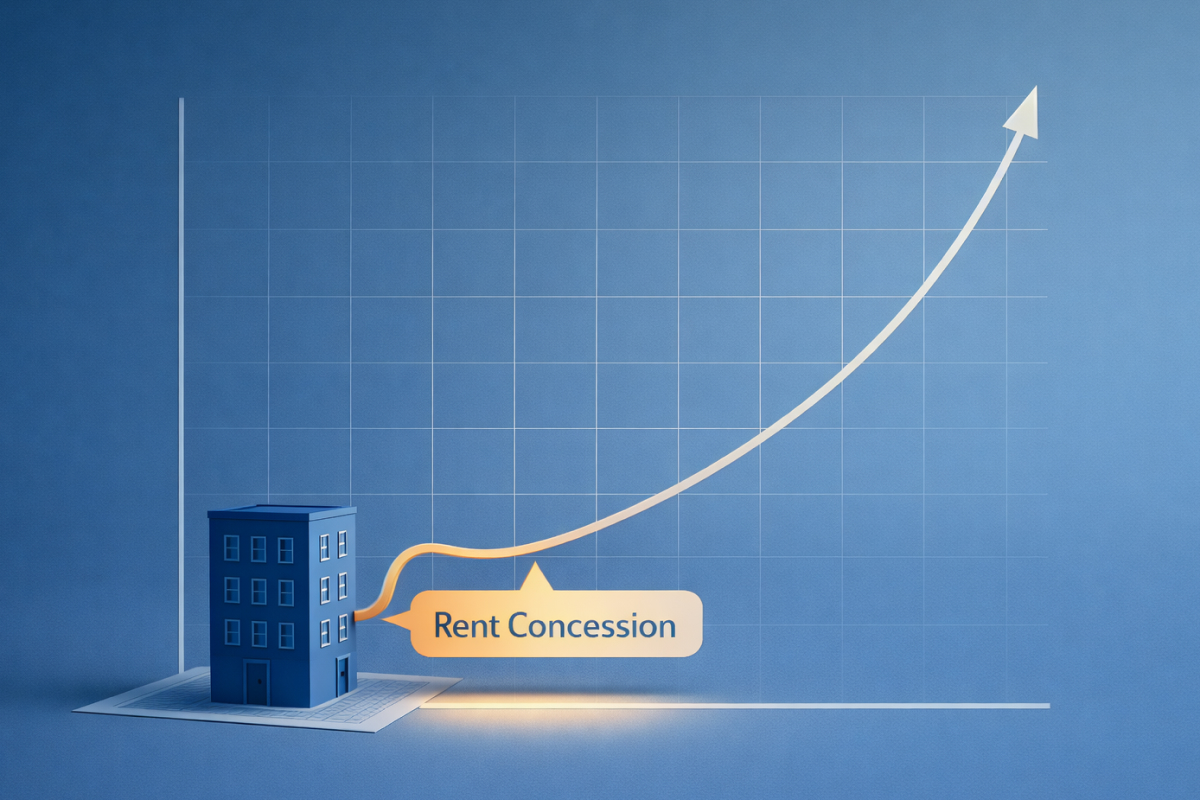
At its core, a rent concession is a temporary incentive (like first month free, a reduced rate, or temporary decrease) that reduces effective rent without permanently lowering the face rent on a lease. It’s designed to solve a short-term issue, like vacancy or leasing friction, without changing your long-term pricing strategy.
It can take many forms: a few free months of rent, a reduced rental rate for a set period, or capping expenses for certain items. It’s an effective way of getting tenants to sign the lease.
What it is not: a replacement for proper pricing, good unit condition, or strong operations. When concessions start acting like a permanent feature of your leasing process, something else usually needs attention.
A few years ago, an investor we worked with owned a small multifamily property that looked perfectly healthy on paper. Rents were at (or even slightly over) market rates. Occupancy stayed high. Nothing in the monthly reports suggested trouble. But cash flow kept coming in lower than expected.
When we dug in, the issue wasn’t maintenance or delinquency. It was concessions. Nearly every new lease included some version of “first month free,” but those discounts lived only in the lease documents. On the rent roll, everything looked normal. In reality, they were facing 18 months of strained cashflow.
That’s the risk with rent concessions. They solve a problem quickly, reduce vacancies and boost the value of the property, but sometimes you step back and look at the portfolio as a whole and find they are costing you more than you accounted for.
Example: A one-month concession on a $1,500 unit feels small. But spread across a 12-month lease, that’s an effective rent of $1,375: an 8.3% reduction. Multiply that across four units, and you’ve quietly given up $6,000 in annual revenue without ever “lowering rent.”
The other acute risk of concessions is with the tenants that are signing the leases. Lease payments can be a large part of a tenant’s overall expenses, whether it’s with a residential lease or a commercial lease. A few months of free rent can be very tempting to the tenant, but before you sign, you have to make sure that the tenant will be able to pay the full lease rate when the free months are over. If they can’t, not only do you lose a tenant the hard way, you didn’t even get the full rent when they were in place. It hurts twice.
Concessions are most effective when the goal is minimizing long term vacancies and boosting the income-based value of a property. Vacancy carries costs that don’t always show up cleanly on a rent roll. Lost rent, utilities, turnover expenses, and management time all add up quickly. In many cases, a single concession that shortens vacancy by a few weeks is cheaper than holding out for full rent.
They also make sense in softer or seasonal markets. When comparable properties are offering incentives, refusing to adapt doesn’t protect your portfolio, it just slows leasing. Concessions let you stay competitive while preserving face rent, which still matters for renewals, valuations, and financing conversations.
There are also moments where speed and certainty matter more than perfect optimization. Stabilizing a property before refinancing or hitting occupancy thresholds tied to loan covenants are good examples. In those cases, concessions are less about generosity and more about risk management.
If a unit won’t lease because of poor condition, outdated finishes, layout issues, or a maintenance reputation, a concession won’t fix the real problem. It may fill the unit temporarily, but it often attracts short-term tenants and increases turnover later.
Concessions also become dangerous when they turn into the default solution. If every lease requires an incentive, that’s usually a signal that pricing and performance are out of sync. Without tracking effective rent, portfolios can look stable while quietly underperforming.
Intentional concessions start with visibility. A one-month concession on a twelve-month lease reduces effective rent by more than eight percent. If that number isn’t explicit in your reporting, you’re making decisions without seeing the full cost.
Front-loaded incentives tend to work best. Free rent at move-in is easier to track, preserves face rent, and simplifies renewals. You can spread the concessions out over the initial months of the lease (for example, months 2, 4, and 6 could be free) so you don’t take the hit all at once, but get them out of the way as soon as you can. More importantly, concessions should follow rules rather than gut feel. Clear guidelines around when incentives are allowed, how large they can be, and who approves them prevent short-term fixes from becoming long-term habits.
At a minimum, concessions deserve a monthly check-in. Were they used? Where? And for what reason? That quick review keeps small decisions from compounding unnoticed.
An annual review should go deeper, connecting concessions to effective rent, occupancy stability, and overall portfolio cash flow performance. If concessions aren’t visible in these reviews, they’re already shaping your results without your consent.
Rent concessions aren’t a sign of failure. They’re a lever. The difference between a disciplined portfolio and a leaky one isn’t whether concessions exist but whether they’re intentional, measurable, and managed with clear eyes.
Scenario:
A 2-bed unit rents for $1,600/month. It’s clean, recently turned, and priced at market but leasing activity is slow in a seasonally soft month.
Option A: Hold Firm, No Concession
Total vacancy cost: $3,800
Option B: Offer One Month Free on a 12-Month Lease
Effective rent:
$1,600 × 11 ÷ 12 = $1,467/month
Net result:
Net benefit: ~$2,200
Why the concession wins:
The unit was market-ready. Demand existed, just slower than ideal. The concession didn’t hide a problem, it accelerated leasing.
Takeaway:
If a concession meaningfully shortens vacancy, it’s often cheaper than waiting, especially when the unit itself isn’t the issue.
Scenario:
A similar unit is listed at $1,600/month, but it has dated finishes and poor photos. Leasing has stalled.
Option A: Offer a One-Month Concession
But here’s what happens next:
Over two years, the unit ends up:
True cost (over 24 months):
Total hidden cost: $6,200+
Option B: Accept Short Vacancy, Fix the Real Problem
Total cost: $3,600
After improvements:
Why the concession loses:
The incentive didn’t fix demand—it distracted from the underlying issue. The portfolio paid for it repeatedly, just not all at once.
Takeaway:
If concessions are compensating for unit quality or operational problems, they usually cost more than vacancy plus a fix.
Our real estate proforma is a forward-looking financial model (in Excel) built to help investors understand a property’s projected performance so you can make informed decisions with confidence.

Real estate portfolio management &
accounting software

Your data secured by Plaid.
Copyright 2026 Kestrel, LLC


.svg)