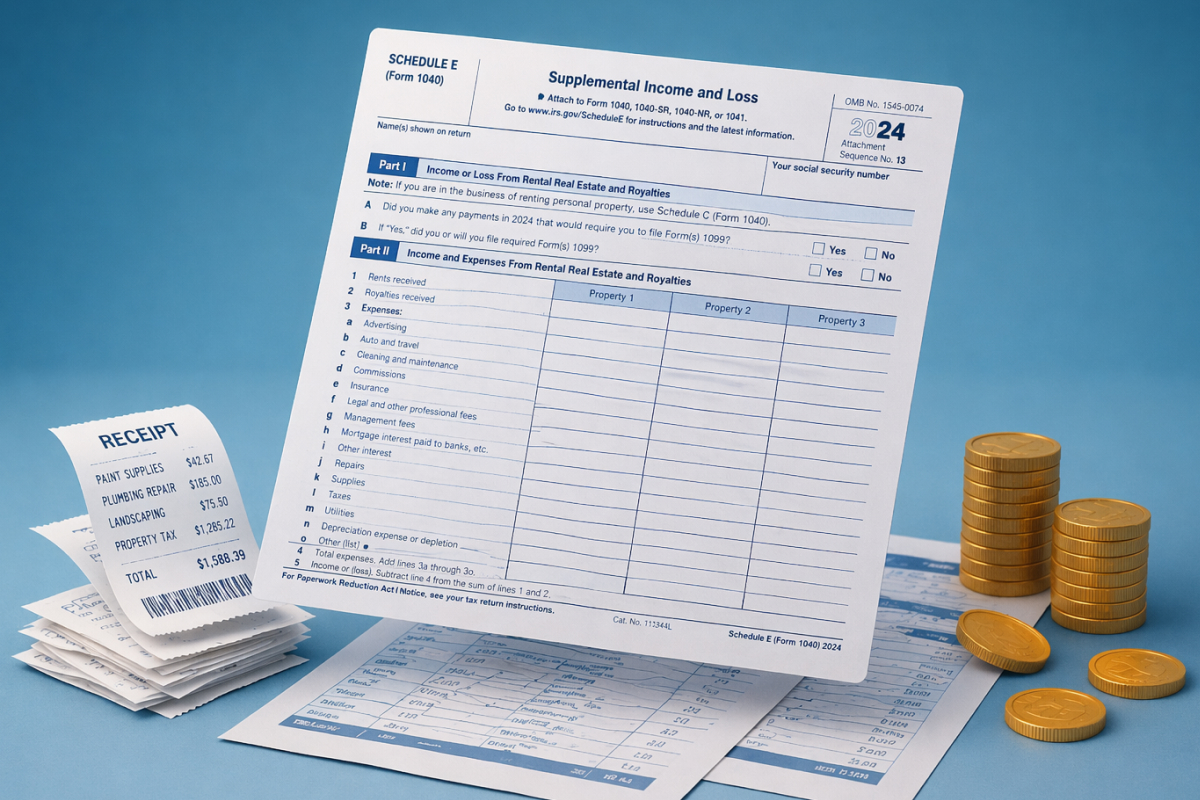
Tax season is one of the most dreaded times of year for real estate investors — and the complexity multiplies fast when you own properties across multiple LLCs, partnerships, or trusts. Between gathering documents from several entities, reconciling accounts across different banks, and making sure your CPA has everything they need to maximize deductions, it's easy to feel like you're running a full-time accounting operation on top of your investment business.
This guide exists to change that. Below is a comprehensive real estate tax prep checklist built specifically for investors managing multiple entities. Use it to enter tax season prepared, organized, and in control — not scrambling. (For foundational IRS guidance on rental property, see Publication 527 – Residential Rental Property.)
Why Real Estate Accounting Gets Complicated with Multiple Entities
Before getting into the checklist, it's worth understanding why multi-entity real estate accounting is uniquely difficult — because the answer shapes exactly what you need to prepare.
Most real estate investors structure their portfolios across multiple legal entities for liability protection and tax planning purposes. A typical mid-size portfolio might include:
- Individual LLCs for each property or property group
- A holding company or parent LLC
- A management company (sometimes an S-Corp for self-employment tax savings)
- Possibly a DST (Delaware Statutory Trust) or partnership interest
Each of these entities has its own EIN, its own bank accounts, its own set of income and expenses, and its own filing obligations. For real estate accounting purposes, you may need to file a Schedule E (for rental income), a Form 1065 (for partnerships), a Form 8825 (for rental income from partnerships), or an S-Corp return (Form 1120-S) — sometimes all of the above, depending on your structure.
The result: tax season for a multi-entity real estate investor isn't one return. It can be five, eight, or twelve separate filings, each drawing on a different set of records that may live in completely different systems — or worse, scattered across email threads, PDF statements, and spreadsheets.
The Complete Real Estate Tax Prep Checklist for Investors with Multiple Entities
Work through each section below for every entity in your portfolio. The goal is to have everything organized and ready to hand to your CPA — so they spend time on strategy, not document hunting.
Section 1: Entity and Structure Documentation
Before you can file anything, your CPA needs to understand your legal structure. For each entity, gather the following:
- [ ] Operating agreement or partnership agreement — including any amendments made during the tax year
- [ ] Current ownership percentages — especially important if ownership changed during the year
- [ ] EIN confirmation letter (Form SS-4) — if your CPA doesn't already have it on file
- [ ] State registration documents — particularly if you formed new entities or registered in new states this year
- [ ] Any new entities formed — provide all formation documents and the date of formation
- [ ] Dissolution documents — if you wound down any entity during the year
- [ ] Changes to your entity structure — mergers, conversions from LLC to S-Corp, etc.
Pro tip: Keep a one-page entity map that shows how your entities relate to each other — which entities own which properties, and which entity bills management fees to which other entities. CPAs are often billed by the hour. An entity map saves time and money.
Section 2: Income Documentation by Entity
Real estate accounting requires precise income tracking at the property level and the entity level. For each entity, compile:
Rental Income
- [ ] Year-end rent rolls for all properties in the entity, showing each unit, lease term, monthly rent, and actual amounts collected
- [ ] Management company statements — monthly owner draw statements for the full calendar year
- [ ] 1099 forms received — if any tenant or property manager issued a 1099 to your entity
- [ ] Security deposits collected — note whether any were applied to rent or damages during the year (those become taxable income)
- [ ] Late fees, pet fees, and other ancillary income — document separately from base rent
- [ ] Lease termination fees received during the year
Other Income
- [ ] Laundry, parking, or storage income — often missed but fully taxable
- [ ] Utility reimbursements from tenants (if you pay and they reimburse)
- [ ] Insurance claim proceeds — distinguish between casualty losses (different treatment) and reimbursements for ordinary repairs
Section 3: Expense Documentation by Entity
This is where most of the tax savings live. Real estate accounting for expenses must be meticulous, because incorrectly categorized or missing expenses mean overpaid taxes. For each entity:
Operating Expenses
- [ ] Property management fees — full year of statements from each property manager
- [ ] Repairs and maintenance — distinguish repairs (deductible in full this year) from capital improvements (depreciated over time)
- [ ] Utilities paid by the entity
- [ ] Insurance premiums — property, liability, umbrella
- [ ] HOA fees (if applicable)
- [ ] Landscaping, snow removal, cleaning
- [ ] Advertising and leasing costs — listing fees, photography, rental platforms
Professional Services
- [ ] CPA and accounting fees — this is deductible!
- [ ] Legal fees — lease drafting, eviction costs, entity setup (note: entity setup costs may need to be amortized)
- [ ] Property inspection fees
- [ ] Appraisal fees (in some cases)
Financing Costs
- [ ] Mortgage interest — obtain year-end statements from all lenders for each property (Form 1098 if from a bank; direct statement if from a private lender)
- [ ] Loan origination fees — these are often deductible or amortizable
- [ ] Refinancing costs — if you refinanced during the year, these have specific tax treatment
- [ ] Points paid on new mortgages
Depreciation
- [ ] Prior-year depreciation schedules — provide to your CPA so they can continue the schedule
- [ ] Any new capital improvements made during the year — document cost, date placed in service, and description
- [ ] Cost segregation studies — if you've had one done, bring the report; if you haven't, ask your CPA if it makes sense for your portfolio size
- [ ] Vehicles used for real estate business — log mileage and business use percentage (see IRS standard mileage rates)
Travel and Home Office
- [ ] Travel to properties — airfare, lodging, mileage for out-of-state properties
- [ ] Home office deduction — if you manage your portfolio from a dedicated space, document the square footage (see IRS Publication 587)
- [ ] Cell phone and internet — deductible to the extent used for real estate business
Section 4: Bank and Financial Accounts
One of the biggest time-wasters in real estate accounting — and one of the most common sources of errors — is unreconciled bank accounts. Before handing anything to your CPA, complete the following for each entity:
- [ ] Reconcile all bank accounts as of December 31 (if you do so)— meaning your books match your bank statement to the penny
- [ ] Identify and document any unexplained discrepancies — don't leave these for your CPA to find
You will need to do these first two if you use Quickbooks, if you use a real-time account view like Kestrel, there is no need for reconciliation. - [ ] Provide full-year bank statements for all accounts held by each entity
- [ ] Credit card statements for any cards used for entity expenses
- [ ] PayPal, Venmo, Zelle, or other digital payment records — especially if tenants pay rent through these platforms
- [ ] Intercompany transfers — if one entity transferred money to another (e.g., management fees paid from a property LLC to a management company), these must be documented and consistent with your operating agreements
Note on intercompany transactions: This is a particularly tricky area of real estate accounting for multi-entity investors. Intercompany loans, management fee arrangements, and reimbursements must be properly documented and at arm's length to withstand IRS scrutiny.
Section 5: Property Acquisition and Disposition Records
If you bought, sold, or exchanged any property during the tax year, gather the following:
Property Purchases
- [ ] Settlement statement (HUD-1 or Closing Disclosure) for every property acquired
- [ ] Purchase price allocation — your CPA needs to know the breakdown between land, building, and personal property for depreciation purposes
- [ ] Date of acquisition and date placed in service — these are not always the same
Property Sales
- [ ] Settlement statement for every property sold
- [ ] Original purchase price and all capital improvements since acquisition (this builds your "basis")
- [ ] Depreciation taken over the holding period — required for depreciation recapture calculation
- [ ] Exchange documentation — if you completed a 1031 exchange, provide all exchange documents, including the Qualified Intermediary (QI) closing statements for both the relinquished and replacement properties
- [ ] Installment sale records — if you seller-financed a sale, provide the promissory note and payment schedule (reported on Form 6252)
Section 6: Partnership and K-1 Considerations
If any of your entities are taxed as partnerships or S-Corps, there are additional items to address:
- [ ] List of all partners/members and their ownership percentages as of January 1 and December 31
- [ ] Any changes in ownership during the year — sales, gifting, inheritance of interests
- [ ] Guaranteed payments made to any partners or members
- [ ] Distributions made to each partner during the year
- [ ] Capital account balances — your CPA should be tracking these, but confirm they're up to date
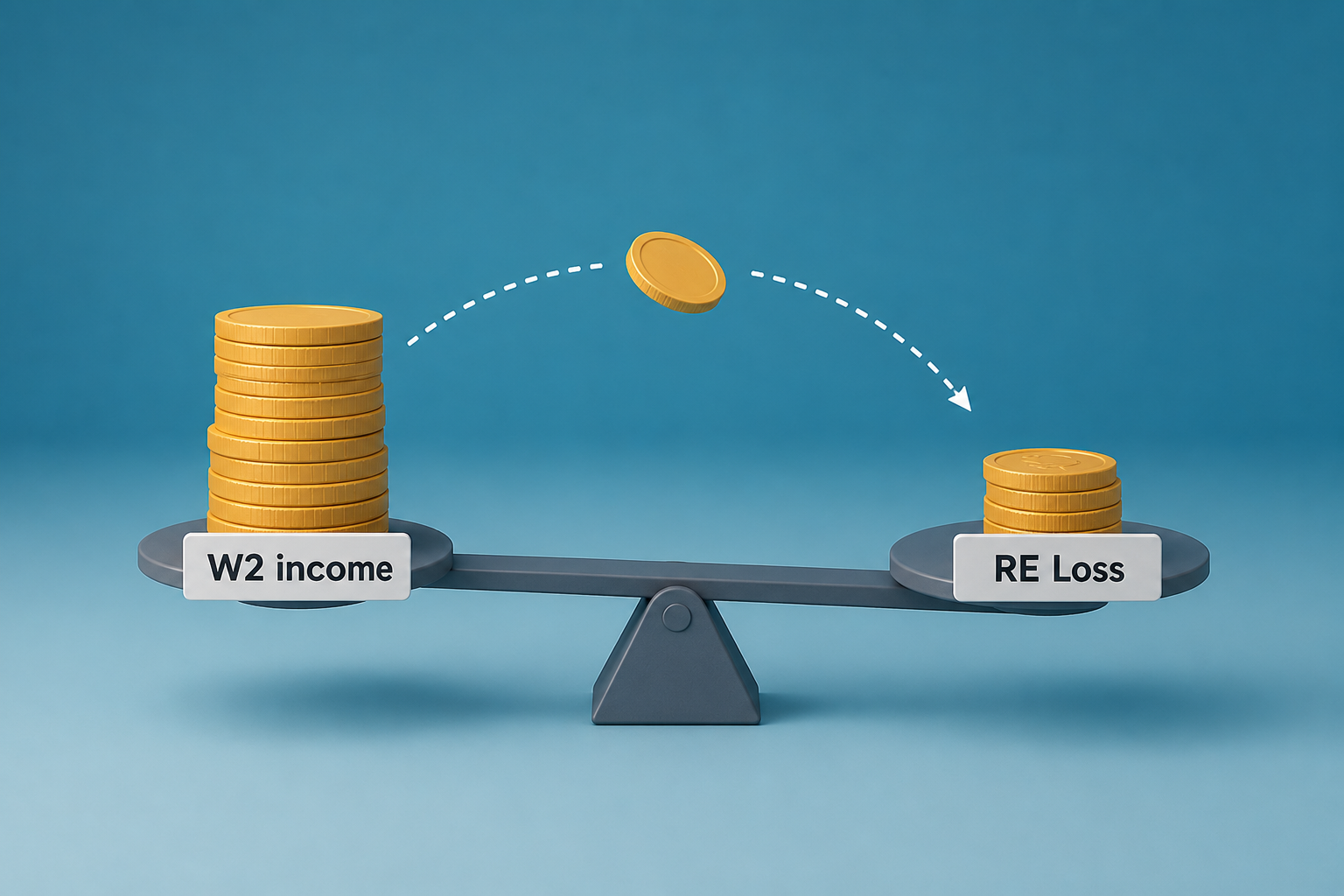
- [ ] Passive vs. non-passive activity — if you or any partner qualifies as a real estate professional for tax purposes, this dramatically changes how losses are treated; document hours spent in real estate activities (see IRS Publication 925 on passive activity rules)
Real Estate Professional Status: This is one of the most valuable tax positions available in real estate accounting, but it requires meeting strict IRS criteria (more than 750 hours per year spent in real estate activities, constituting more than 50% of your total working hours). The rules are detailed in IRS Publication 925 and IRC Section 469. If you believe you qualify, document your hours in a contemporaneous log throughout the year — not retroactively at tax time.
Section 7: Depreciation and Cost Recovery
Depreciation is the core of real estate tax strategy, and it requires careful real estate accounting to maximize. Make sure your CPA has:
- [ ] Prior-year depreciation schedules for every property in every entity
- [ ] New capital expenditures placed in service during the year, with costs and dates
- [ ] Bonus depreciation elections — confirm with your CPA whether to elect bonus depreciation on qualifying personal property (see IRS guidance on bonus depreciation and Publication 946)
- [ ] Section 179 elections — relevant for certain property improvements
- [ ] MACRS asset classification — ensure new improvements are correctly classified (residential vs. commercial, 5-year vs. 7-year vs. 27.5-year vs. 39-year property)
- [ ] Partial disposition elections — if you replaced a roof, HVAC system, or other structural component, you may be able to take a loss on the replaced component (per the IRS tangible property regulations)
Section 8: Payroll and Contractor Payments
If your entities employ staff or regularly use contractors, these items are often overlooked until tax season creates a scramble:
- [ ] W-2 forms issued to any employees
- [ ] 1099-NEC forms — must be issued to any contractor paid $600 or more during the year. These must be filed by January 31, so this item needs attention early
- [ ] Payroll records and summaries for the full year
- [ ] Workers' compensation and unemployment tax filings — confirm these are current
- [ ] Health insurance premiums paid on behalf of owners/employees — treatment varies by entity type
Section 9: Entity-Level Tax Filings and Deadlines
Multi-entity real estate accounting means managing multiple filing deadlines. Keep this timeline in mind:
DeadlineFilingJanuary 311099-NEC to contractors; W-2 to employeesMarch 15Partnership returns (Form 1065) and S-Corp returns (Form 1120-S) — or extend (Form 7004)April 15Individual returns (Form 1040 with Schedule E) — or extend (Form 4868)September 15Extended partnership and S-Corp returnsOctober 15Extended individual returns
Important: If your entities are taxed as partnerships or S-Corps, those returns are due before your individual return. The K-1s from those entity returns flow into your personal return — so extensions at the entity level typically mean an extension at the individual level as well.
Section 10: Common Real Estate Accounting Mistakes to Avoid
Even experienced investors miss these. Review before finalizing your tax prep:
- Mixing entity funds. Paying personal expenses from an LLC account (or vice versa) is one of the fastest ways to create both a tax problem and a liability exposure problem. If it happened, document it and categorize it correctly.
- Missing the passive activity rules. Rental losses are generally passive, which means they can only offset passive income — unless you qualify as a real estate professional. IRS Publication 925 covers passive activity rules in detail. Misclassifying this can lead to disallowed deductions or, worse, deductions taken that later get reversed on audit.
- Forgetting depreciation recapture. When you sell a property, the IRS recaptures depreciation you've taken at 25% (unrecaptured Section 1250 gain), not at regular capital gains rates. This surprises investors who assume they'll pay standard long-term capital gains on the full profit. Report using Schedule D and Form 4797.
- Incorrectly capitalizing vs. expensing improvements. The IRS has specific tangible property regulations (the "repair regulations") that govern when a cost must be capitalized vs. expensed. In general, routine repairs are expensed; betterments, adaptations, and restorations must be capitalized.
- Inconsistent management fee documentation. If your management company charges property LLCs management fees, those fees must be documented with an actual written agreement, consistently billed, and paid — not just recorded as a journal entry at year-end.
- Not tracking basis. Every dollar of improvement you make to a property increases your basis, which reduces your taxable gain at sale. If you haven't been tracking capital improvements, this is the year to start, and to work with your CPA to reconstruct prior improvements if possible.
How the Right Real Estate Accounting System Changes Tax Season
For investors managing one or two properties under a single entity, a basic spreadsheet may be sufficient. But once your portfolio spans multiple LLCs, multiple bank accounts, and multiple property managers, the manual approach breaks down fast.
The investors who report the smoothest tax seasons share one common trait: they're not doing anything in October, November, or December to get ready for April. They're ready year-round, because their real estate accounting system is doing the work continuously.
What that looks like in practice:
- Transactions auto-categorize to Schedule E line items as they happen — not in a year-end panic
- Bank feeds stay connected across every entity's accounts, so there's never a reconciliation backlog
- Property managers' reports are reviewed automatically for billing errors and missed rent increases — so those discrepancies are caught during the year, not discovered by your CPA
- CPA-ready reports are generated in one click — property-by-property P&L statements, entity-by-entity summaries, depreciation schedules
The technology to do this exists today. Investors who adopt it don't dread tax season. They close the books in a day, hand their CPA a clean package, and spend the time they saved on finding the next deal.
The Multi-Entity Real Estate Accounting Checklist: Quick Reference
Use this summary as your at-a-glance checklist for each entity in your portfolio:
Entity Documentation
- [ ] Operating agreement (current)
- [ ] Ownership percentages
- [ ] EIN on file
- [ ] New entity or dissolution documents
Income
- [ ] Year-end rent rolls
- [ ] All management statements (12 months)
- [ ] 1099s received
- [ ] Security deposit activity
- [ ] Ancillary income sources
Expenses
- [ ] Management fees
- [ ] Repairs vs. improvements (categorized)
- [ ] Insurance premiums
- [ ] Mortgage interest (Form 1098 or lender statement)
- [ ] Loan origination / refinancing costs
- [ ] Professional fees
- [ ] Travel and vehicle logs
Bank Reconciliation
- [ ] All accounts reconciled as of 12/31
- [ ] Full-year bank and credit card statements
- [ ] Intercompany transactions documented
Acquisitions and Dispositions
- [ ] Closing statements for purchases
- [ ] Purchase price allocations
- [ ] Closing statements for sales
- [ ] Basis documentation
- [ ] 1031 exchange documents (if applicable)
Depreciation
- [ ] Prior-year depreciation schedules
- [ ] New capital improvements (cost + date placed in service)
- [ ] Cost segregation study (if applicable)
Partnerships and K-1s
- [ ] Partner/member list and percentages
- [ ] Guaranteed payments and distributions
- [ ] Real estate professional hours log (if applicable)
Contractor Payments
- [ ] 1099-NEC issued to contractors ($600+)
- [ ] Payroll records and W-2s
Frequently Asked Questions: Real Estate Accounting for Multi-Entity Investors
What is real estate accounting?
Real estate accounting is the practice of recording, categorizing, and reporting the financial activity of real estate investments — including rental income, operating expenses, depreciation, mortgage interest, and capital transactions. For investors with multiple properties or entities, real estate accounting encompasses the books for each entity separately as well as consolidated portfolio-level reporting.
Do I need a separate bank account for each LLC?
Yes. Commingling funds across entities — or between an entity and your personal accounts — creates both legal and tax problems. Each LLC should have its own dedicated bank account, and transactions should never cross entity lines without proper documentation.
What is Schedule E in real estate accounting?
Schedule E (Supplemental Income and Loss) is the IRS form used to report rental income and expenses from residential real estate. It must be filed for each rental property, attached to your personal Form 1040. If your properties are held in a partnership or S-Corp, the income and expenses flow through to you via a Schedule K-1, which then feeds into Schedule E.
Can I deduct losses from my rental properties?
Rental losses are generally "passive" and can only offset other passive income under IRC Section 469. However, there is a limited exception: if your Adjusted Gross Income (AGI) is under $100,000 and you actively participate in managing your rentals, you may deduct up to $25,000 in rental losses against ordinary income. This exception phases out between $100,000 and $150,000 AGI. Investors who qualify as real estate professionals can deduct rental losses without limitation. See IRS Publication 925 for the full rules.
What is a 1031 exchange and how does it affect my tax prep?
A 1031 (like-kind) exchange allows you to defer capital gains taxes when you sell a property by reinvesting the proceeds into a replacement property within specific time windows (45 days to identify, 180 days to close). For tax preparation purposes, you'll need all exchange documents including the Qualified Intermediary closing statements, identification letters, and replacement property closing disclosure. Your CPA will report the exchange on Form 8824.
How does depreciation recapture work when I sell a rental property?
When you sell a rental property, the IRS "recaptures" the depreciation you've taken over the holding period. This recaptured depreciation is taxed at a maximum rate of 25% (as "unrecaptured Section 1250 gain"), which is higher than the 15% or 20% rate that typically applies to long-term capital gains. The sale is reported on Form 4797 (Sales of Business Property) and Schedule D. Understanding your accumulated depreciation before selling is an important part of real estate accounting and tax planning.
What software is best for real estate accounting with multiple entities?
The right tool depends on your portfolio size and structure. QuickBooks is widely used but charges per entity and isn't purpose-built for real estate. Spreadsheets work at small scale but break down quickly with multiple entities and bank accounts. Purpose-built real estate accounting platforms — designed specifically for investors with multiple entities — allow you to track all properties and LLCs in one place, connect bank accounts automatically, and generate property-by-property reports for tax time.
Real estate tax preparation is complex and the information in this guide is for educational purposes only. Always consult a qualified CPA or tax advisor who specializes in real estate for guidance specific to your situation.







.svg)